


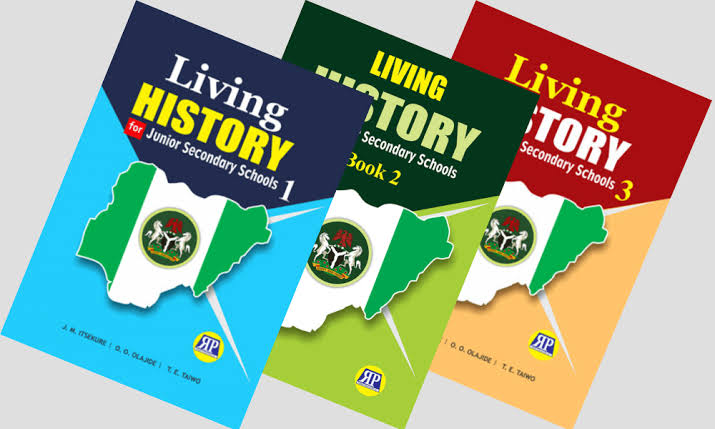
 The Igbo Community Association, Abuja, has called on the Federal Government to ban a history textbook titled Living History for Junior Secondary Schools over its alleged exclusion of Igbo history.
The association accused the authors of deliberately omitting Igbo contributions to Nigeria’s history and development, warning that such exclusion could fuel hatred and resentment against Igbos and other minority groups.
In a statement jointly signed by its President-General, Engr. Ikenna Ellis-Ezenekwe, and Secretary-General, Emmanuel Onah, the group described the omission as an aberration and a “grave distortion” of Nigeria’s historical narrative that must not be ignored.
According to the association, the content of the textbook undermines national unity by promoting divisive narratives capable of setting one ethnic group against another.
The Igbo Community Association urged Nigerians to resist what it described as attempts to rewrite history in ways that marginalise any section of the country, stressing that such actions threaten peaceful coexistence.
It specifically called on the Federal Government to immediately ban the textbook, confiscate and destroy existing copies, and prohibit its use in schools and other educational institutions nationwide.
The group also demanded sanctions against those responsible for the publication, including the authors and publisher, urging authorities to blacklist them and take appropriate disciplinary action.
In addition, the association called for their prosecution, alleging that the textbook promotes narratives capable of triggering ethnic tension and crisis in the country.
Part of the statement read:
“We demand immediate action from the federal and state governments to ban this textbook, withdraw it from circulation, and stop its use in schools and other educational institutions.
“The authors and publisher should be blacklisted and subjected to disciplinary measures, including prosecution, for promoting divisive narratives capable of causing ethnic crisis in Nigeria.
“We will not tolerate any attempt to erase Igbo contributions to Nigeria’s history and development.”
The association further described the issue as a national concern, urging citizens across ethnic and regional lines to speak out against what it termed historical injustice.
“This is a call to action for all Nigerians to stand against divisive narratives and defend an inclusive and truthful account of our shared history,” the statement added.
The group stressed that history education should promote unity, mutual respect, and understanding among Nigeria’s diverse peoples, rather than deepen divisions or foster exclusion.
